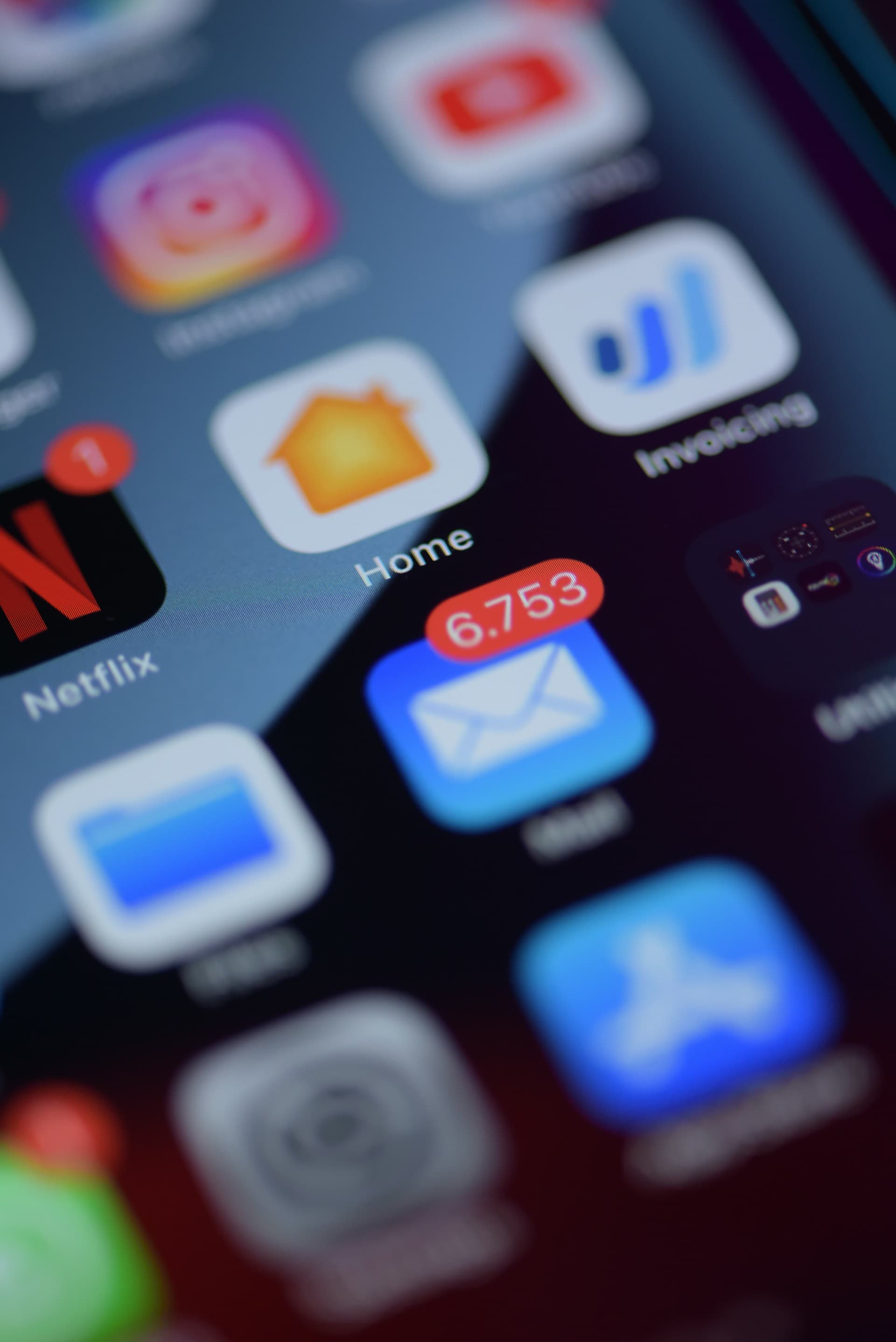
There was a period when a notification meant something had gone wrong. A server was down. Someone needed you urgently. You looked because it was worth looking.
That period ended quietly, somewhere around 2012. By then, notifications had become a growth mechanic. Product teams learned that re-engagement drove retention numbers, and retention numbers drove valuations. The result was software engineered not to help you finish work, but to bring you back to it, and then keep you there.
The shift happened gradually enough that most people didn't notice it as a shift. You just started checking things more. Your phone, your inbox, your project tool, your chat app. Each check was brief and usually unrewarding, but the habit became automatic. The tools had trained you.
How it became a race
Once one tool normalized high-frequency notifications, others had little choice but to follow. If your competitor sends users twelve notifications a day and you send three, the engagement metrics look like you're losing. And engagement metrics, for most software companies, are the metrics that matter.
This is the arms race part. It's not that every product manager wanted to fragment your attention. It's that the incentive structure rewarded fragmentation. Tools that respected your time looked less successful on the dashboard than tools that colonized it.
The features that followed made sense within that logic:
- Unread counts and notification badges
- Red dots on app icons
- Activity feeds that surface movement without meaning
- "Someone reacted to your message"
- Streak warnings for habits the app invented
All of it designed to generate a small anxiety that only the app can relieve.
What we normalized
The strange outcome is that we now treat constant interruption as the natural state of software. A project tool without notifications feels incomplete. An inbox that doesn't badge feels broken.
We've internalized the engagement mechanics so thoroughly that calm software reads as a missing feature rather than a deliberate choice.
But the cost is real and mostly invisible. Deep work requires sustained attention. Every interruption doesn't just cost the seconds it takes to dismiss. It shifts your mental context, and regaining that context takes time that nobody measures. When your tools are optimized for re-engagement, sustained attention becomes something you have to fight for, rather than something your environment supports.
Opting out is harder than it sounds
The obvious answer is to turn notifications off. Most people have tried this in some form. What they find is that the problem runs deeper than the notification settings panel.
The tools themselves are shaped around the assumption of frequent check-ins:
- Interfaces reward the person who is always present
- Information lives in feeds that require constant monitoring to feel current
- Stepping away means feeling out of the loop, which the tools have carefully engineered you to care about
Opting out of the notification layer while staying inside the same system often just converts ambient interruption into ambient anxiety.
What different software looks like
Some tools are built from the start without these mechanics. No notifications, no activity feeds, no unread counts, no signals designed to pull you back in. You open them when you need them. They wait.
Ember works this way. There's no inbox, no @mentions, no presence indicators. When a teammate completes something, you see it next time you open the app. The information reaches you; it just doesn't interrupt you. The distinction sounds small and turns out to matter quite a bit.
The point isn't that silence is inherently virtuous. It's that software designed around your attention being finite will behave differently than software that treats your attention as a resource to extract. Most tools, for a long time, have been the second kind. That's been a choice, not a necessity. The specific product decisions that follow from that choice are worth understanding on their own terms.